AI Intelligence Briefing
A weekly AI digest for supply chain and procurement practitioners — built, hardened, and shipped without me in the loop.
The problem
Keeping up with AI in supply chain and procurement meant hours of reading every week, with no reliable way to separate signal from noise, and dozens of colleagues were each doing that same reading privately, with no shared view of what mattered.
What I built
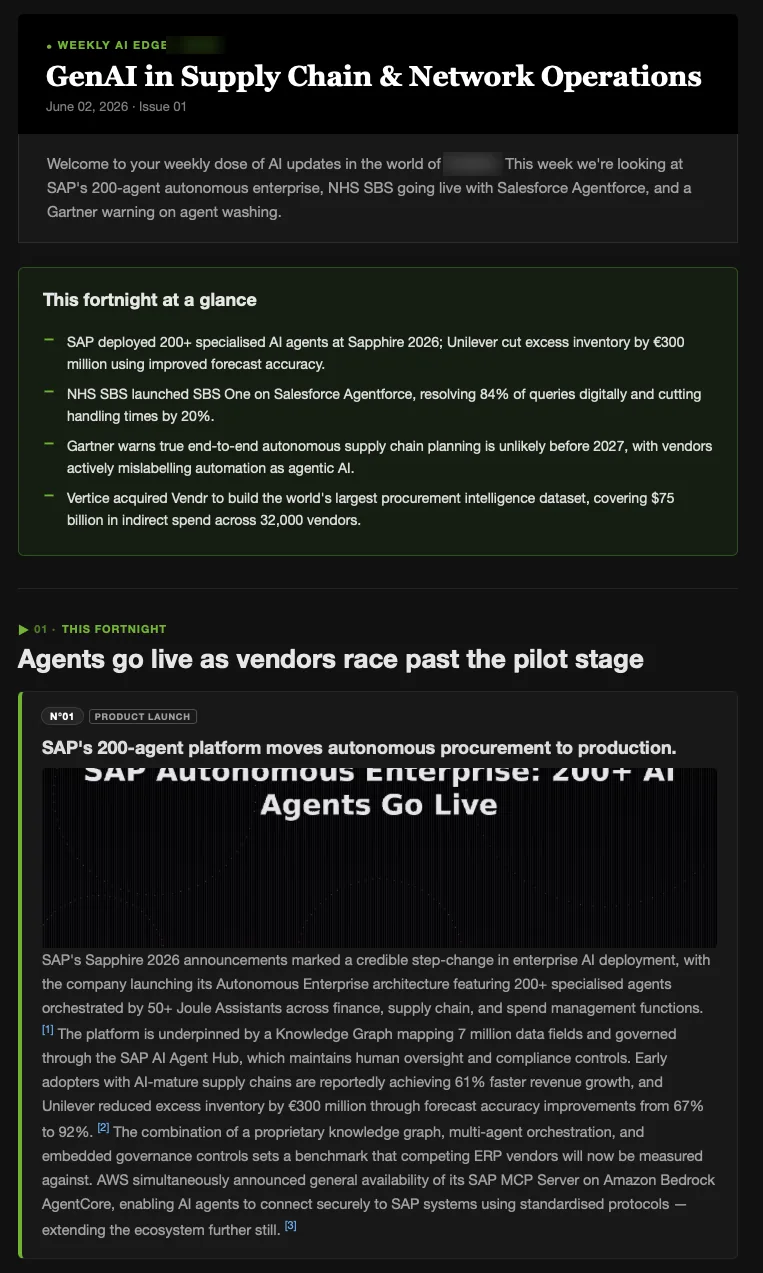
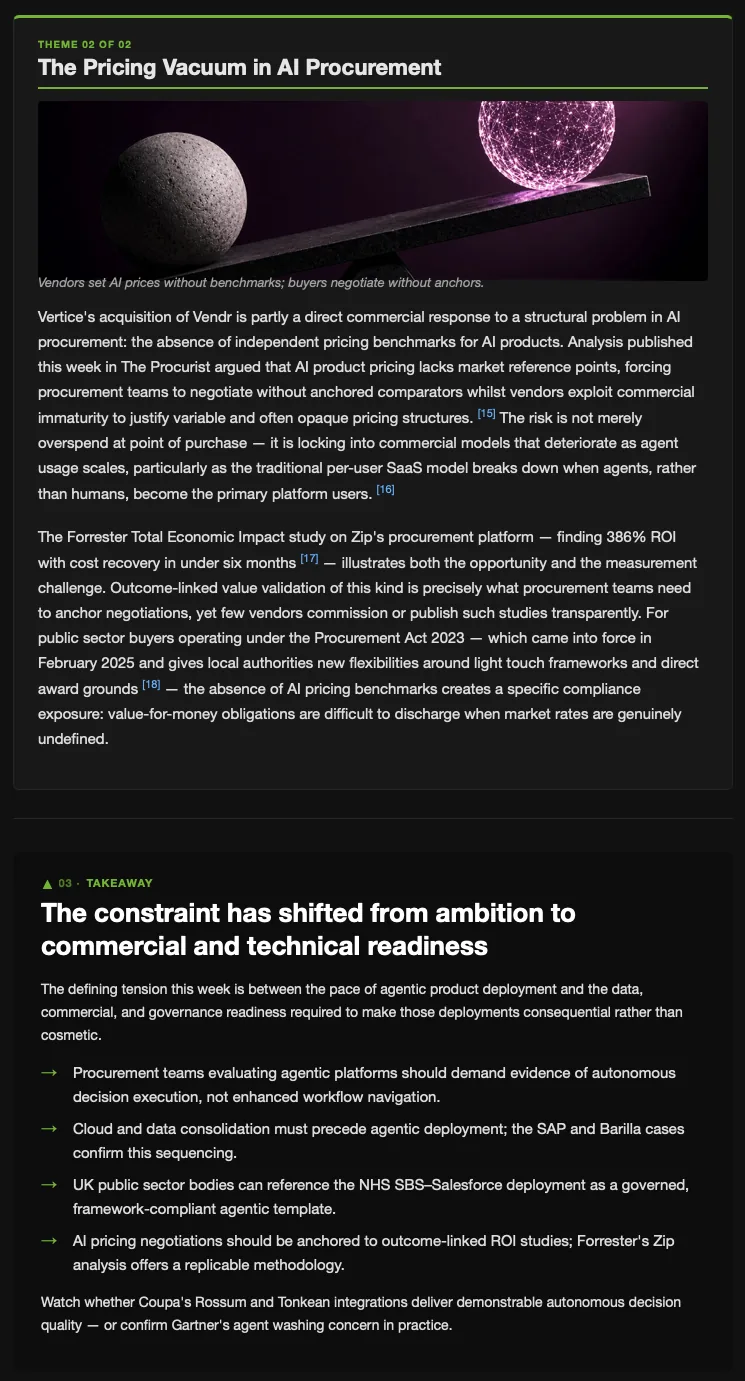
Every week an automated editor reads the week’s AI news, judges what matters to supply chain and procurement, writes a short strategic brief in a consistent house style, and emails it, designed and formatted, to more than 200 colleagues. Nobody writes it, and nobody needs to be in the loop for it to go out.
I took it from prototype through leadership sign-off to production. It gathers candidates from nine industry newsletters and seven semantic searches and scores them with logic tuned to the field: headlines count for more, older stories fade, and no single buzzword can game its way to the top. Claude Haiku writes around thirty summaries in parallel, and one pass of Claude Sonnet turns them into the brief, which is rendered as a branded email and PDF.
Tech stack
Architecture
The hard part
The hard part was editorial judgement without an editor. Not running the same article twice is easy. The real risk is the same themes resurfacing week after week in different stories, and a brief that keeps making the same point gets ignored. So each week the system is shown what its last issue said, its main theme and how it opened, and told to find a fresh angle, while still allowing a deliberate callback when this week genuinely follows on from last.
The scoring needed the same care. Capping any one keyword at three hits per article stops pieces that repeat fashionable terms from crowding out the ones with something real to say.
Screenshots
Outcomes
- Delivered every week to 200+ supply chain and procurement practitioners
- Nominated for a firm-wide Innovation Award (2026); approved by practice leadership
- Runs start to finish in three to five minutes, with nobody in the loop
- Remembers its last eight issues to avoid repeating itself, and caches its work so re-running it costs nothing